Regulatory Frameworks in Switzerland Dictate Specific Requirements for Live Dealer Integrations Within Mobile Casino Platforms
Geschrieben von Zara Patterson · 19.8.2026

Regulatory Frameworks in Switzerland Dictate Specific Requirements for Live Dealer Integrations Within Mobile Casino Platforms
Regulatory frameworks in Switzerland dictate specific requirements for live dealer integrations within mobile casino platforms, and these rules shape everything from game certification to data transmission standards, while operators must navigate federal and cantonal oversight that has evolved since the Intercantonal Agreement on Gambling came into force.
Core Licensing and Oversight Structures
Switzerland operates under a dual system where the Federal Gaming Board, known as ESBK, handles large-scale casino licensing, yet cantonal authorities retain control over smaller operations, and this division directly affects how live dealer streams reach mobile users because providers must secure approvals at both levels before launching real-time table games.
Data indicates that any platform seeking to offer live blackjack or roulette must demonstrate compliance with the Federal Act on Games of Chance and Casinos, which requires independent testing of video feeds and dealer procedures, and researchers at institutions tracking European gaming markets have documented how these checks occur before commercial rollout.
Game Certification Procedures
Live dealer games undergo rigorous certification that begins with software audits conducted by laboratories accredited under ISO/IEC 17025 standards, and this process examines everything from camera angles to shuffle mechanics while ensuring the mobile application delivers uninterrupted streams without introducing latency that could compromise fairness.
Those who have studied Swiss certification timelines note that approval typically spans eight to twelve weeks, during which auditors verify that the dealer operates within a monitored studio environment that meets physical security criteria established by the licensing body, and integration teams must then map these verified streams to mobile APIs without altering the certified output.
Data Transmission and Security Mandates
Encryption protocols form the backbone of data transmission rules, and Swiss regulations require AES-256 standards for all video and betting data moving between the studio and player devices, while additional requirements mandate that servers handling player information remain physically located within the European Economic Area to align with cross-border data protection agreements.
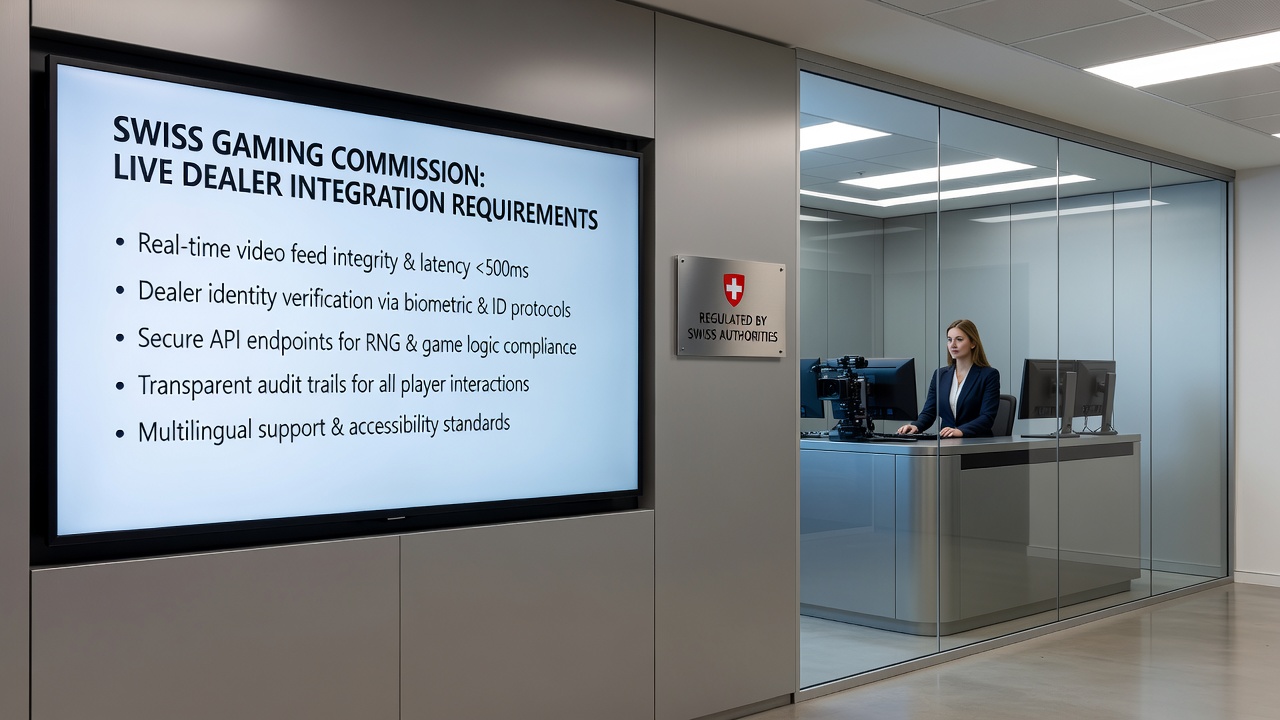
Network monitoring obligations mean that operators log every data packet exchange during live sessions, and these records must be retained for a minimum of five years so that regulators can audit for anomalies such as unauthorized access attempts or stream manipulation, and this level of scrutiny extends to third-party CDN providers that deliver the video content to mobile networks.
Technical Integration Requirements for Mobile Platforms
Mobile applications must incorporate geolocation services that confirm players remain within Swiss territory before allowing access to live tables, and developers achieve this through continuous GPS polling combined with IP verification that triggers session termination if the device leaves approved zones, and these controls integrate directly with the certified dealer platform to prevent cross-border play.
Device compatibility testing forms another layer, and frameworks specify support for current iOS and Android versions along with fallback mechanisms for older operating systems, while accessibility features such as closed captions for dealer announcements must function without degrading the video quality that regulators have already approved.
Updates Anticipated in August 2026
Authorities have signaled forthcoming adjustments to technical standards that will take effect in August 2026, and these changes focus on enhanced multi-factor authentication for dealer login procedures plus mandatory adoption of quantum-resistant encryption algorithms for long-term stream security, and industry observers expect mobile platforms to undergo re-certification cycles to meet the new benchmarks.
One study revealed that similar phased rollouts in neighboring jurisdictions produced measurable improvements in stream integrity within the first quarter after implementation, and Swiss operators have already begun preliminary audits to prepare for the transition without disrupting existing player access.
Conclusion
Switzerland's regulatory approach creates a tightly controlled environment where live dealer integrations must satisfy layered requirements around certification, encryption, and territorial controls, and these rules continue to influence how mobile platforms deliver real-time gaming experiences while maintaining compliance with federal and cantonal mandates.